

Beyblade X vs. Beyblade Burst: What’s New in the Next Generation?

Discover the revolutionary differences between Beyblade X and Beyblade Burst. Learn about X-Dash mechanics, new parts, compatibility, and why X is the next evolution.
Introduction: A New Era of Beyblade Battles
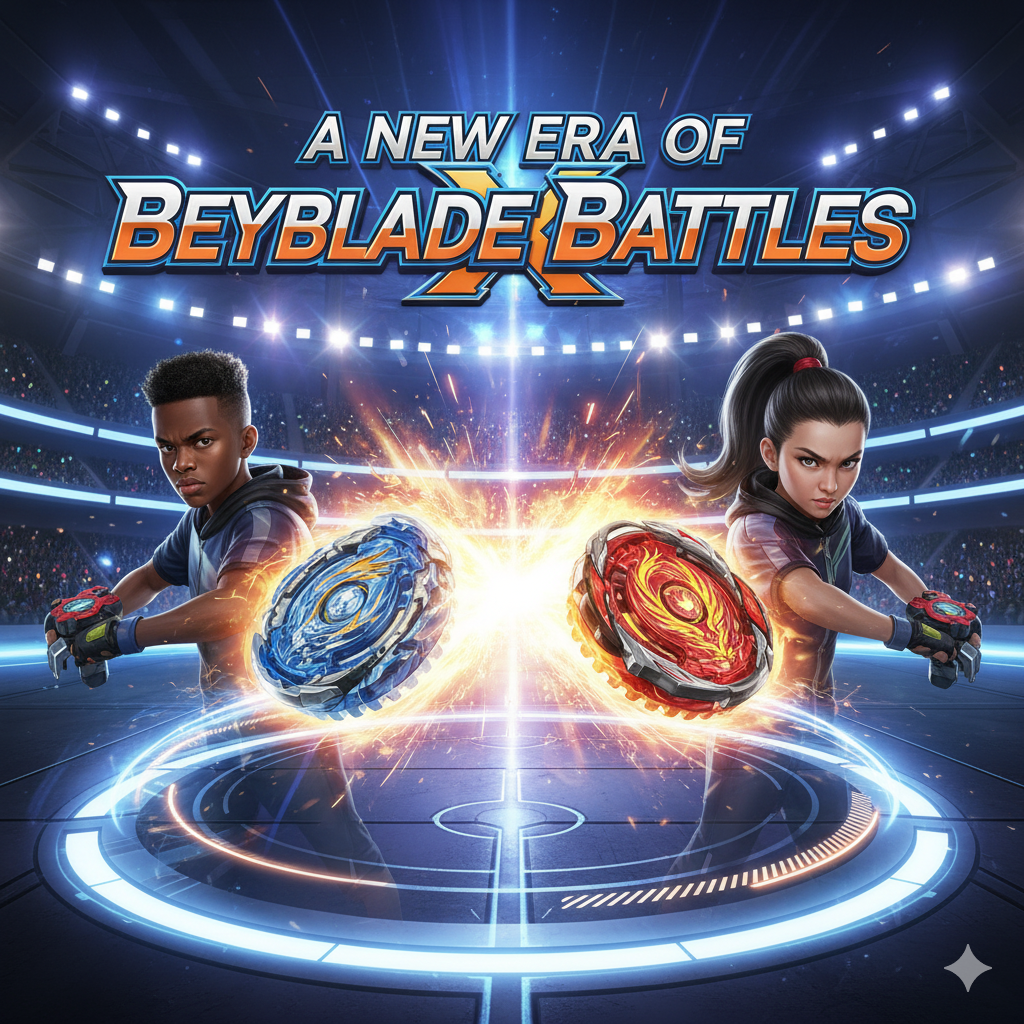
The Beyblade franchise has captivated millions of fans worldwide through constant evolution and innovation. For years, Beyblade Burst dominated competitive play and collecting communities with its explosive burst mechanic and intricate customization system. Then, in 2023, Takara Tomy launched Beyblade X—a revolutionary new generation that fundamentally reimagines how Beyblades battle.
But what exactly separates Beyblade X from its predecessor? Is X truly superior, or does Burst still hold advantages? Whether you’re a veteran blader considering upgrading, a parent trying to understand which system to buy, or a newcomer wondering where to start, this comprehensive comparison will answer all your questions.
This guide explores every aspect of both systems—from core mechanics and part compatibility to competitive viability and collecting considerations. By the end, you’ll understand not just the differences, but why Beyblade X represents the most significant innovation in the franchise’s 25-year history.
The Burst Mechanic vs. X-Dash System: Core Gameplay Differences
How Beyblade Burst Works
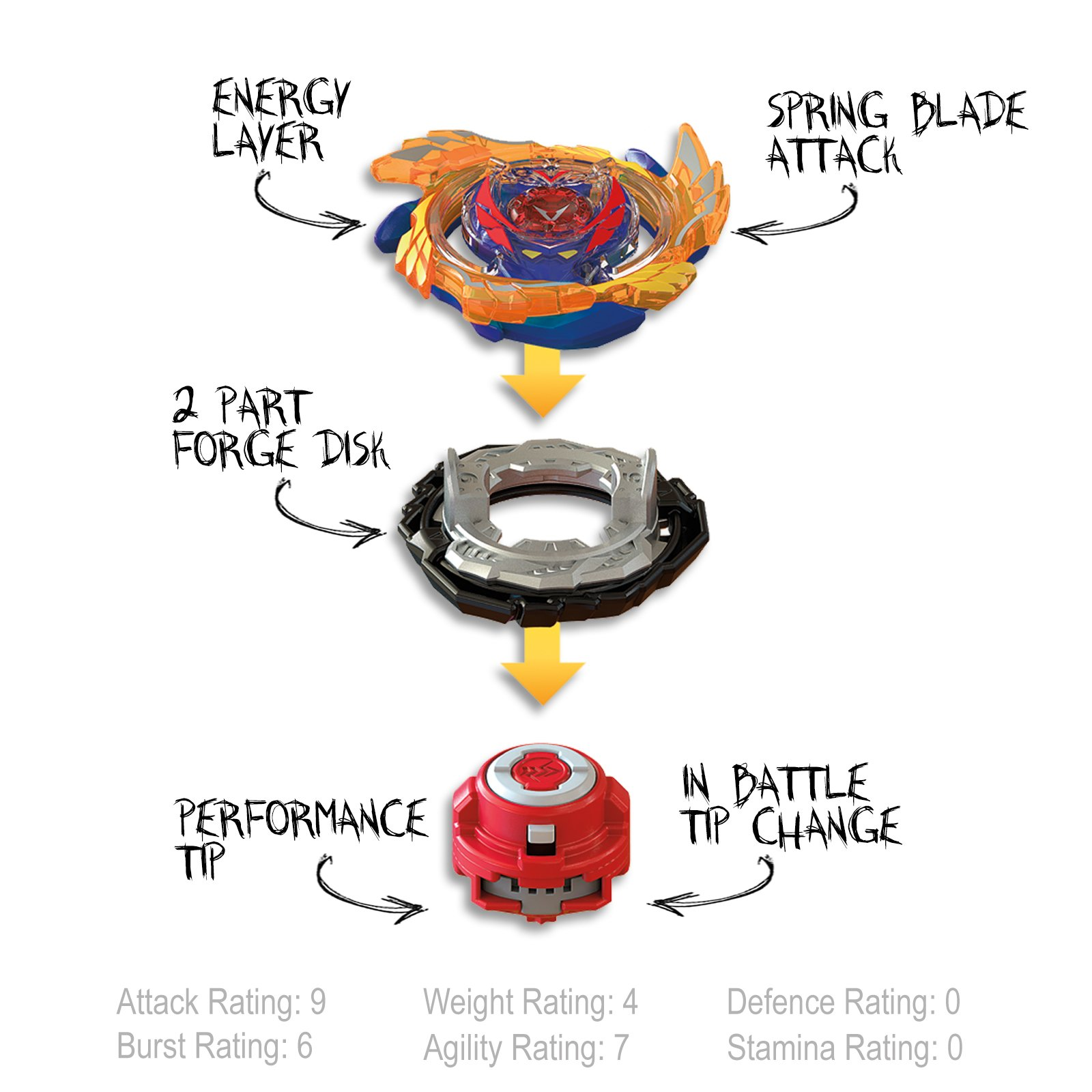
Beyblade Burst introduced a game-changing concept: Beyblades could literally explode during battle. The system uses a spring-loaded mechanism with teeth that lock the layers together. When a Beyblade takes repeated hits or sustained pressure, these teeth gradually slip until the Beyblade “bursts” apart into its component pieces.
This burst mechanic created three victory conditions:
- Burst Finish: Your Beyblade bursts your opponent’s, instantly winning the battle with maximum points
- Out Finish: Knocking the opponent out of the stadium
- Spin Finish: Outlasting your opponent when both remain in the stadium
Burst battles emphasized sustained pressure and strategic angles of attack. Players learned to exploit burst resistance differences, with some combinations featuring tighter locks (harder to burst) while others sacrificed burst resistance for other advantages. The constant threat of bursting created tension throughout every match—even dominant Beyblades could lose instantly to perfectly angled strikes.
Victory Conditions: What’s Changed?
Beyblade X maintains three victory conditions, but with important modifications:
Extreme Finish (X-Over Finish): The signature X victory condition. When a Beyblade executes an X-Dash so powerful it launches over the stadium’s outer wall into special pockets, it scores an Extreme Finish—the X equivalent of Burst’s instant victory. This spectacular finish rewards perfectly executed X-Dashes and creates jaw-dropping moments.
Over Finish: Similar to Burst’s Out Finish, knocking opponents completely out of the stadium scores an Over Finish. However, X stadiums feature different geometry that makes strategic knockouts more skill-dependent.
Spin Finish: When both Beyblades remain in the stadium, the one still spinning wins. Endurance and stamina strategies remain viable, but X-Dashes add complexity—should you risk an aggressive X-Dash attempt or play conservatively for the spin finish?
The removal of bursting fundamentally changes competitive meta. In Burst, burst resistance ratings heavily influenced tier lists. In X, burst resistance is irrelevant—instead, X-Dash activation consistency, impact power, and knockout resistance determine competitive viability.
Stadium Design: How Battle Arenas Evolved
Beyblade Burst Stadium Characteristics
Burst stadiums feature bowl-shaped designs with smooth, continuous surfaces. The standard Burst stadium includes:
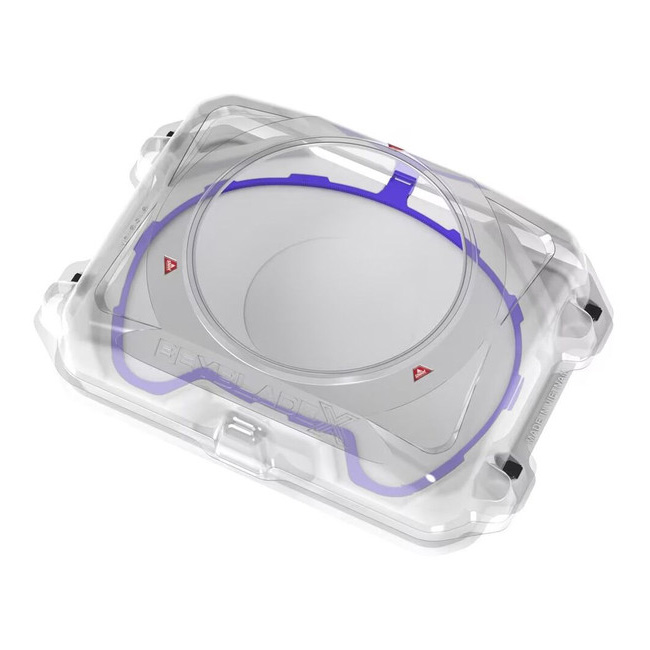
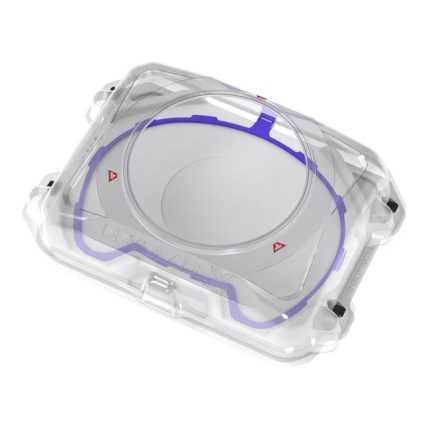
BEYBLADE X BX-32 Wide Extreme Stadium, TAKARA TO
BEYBLADE X BX-32 Wide xtreme Stadium
100% brand new and original
Product contents: Cover (1), main body (1), fasteners (4), bay code card (1), instruction manual (1)
Package Dimensions: 44 x 7.5 x 6 cm
Weight: 810g
Unit: Box
In stock
- Central circular floor where most battling occurs
- Gradual slopes toward stadium edges
- Raised ridge around the perimeter creating an exit barrier
- Pockets beyond the ridge where knocked-out Beyblades land
Burst stadium design emphasized sustained combat in the central area. The smooth surfaces allowed stamina types to conserve spin efficiently, while attack types used the slopes to generate momentum for powerful strikes. The raised ridge prevented accidental exits, ensuring only deliberate, powerful hits resulted in stadium outs.
Different Burst stadium variants existed—Wide Type stadiums, standard stadiums, pro tournament stadiums—but all maintained the basic bowl shape with smooth surfaces optimized for the burst mechanic and traditional spinning top physics.
Beyblade X Stadium: Built for Speed
The Beyblade X Stadium represents radical redesign. Instead of smooth bowls, X stadiums feature:
Acceleration Rails: Three distinctive rails positioned at specific points around the stadium perimeter. These raised rails are the key to X-Dashes—when Beyblades strike them correctly, the impact triggers explosive acceleration. Rail positioning is strategic, creating zones where X-Dash attempts are high-reward but high-risk (potential self-knockout).
Extreme Zone Pockets: Beyond the main stadium walls sit special pockets called Extreme Zones. Landing in these pockets after an X-Dash scores the spectacular Extreme Finish. These pockets are positioned to reward powerful, well-angled X-Dashes while punishing poorly executed attempts that send Beyblades flying wildly.
Flatter Central Area: Unlike Burst’s bowl shape, X stadiums feature flatter central surfaces. This geometry supports the higher speeds generated by X-Dashes, preventing Beyblades from uncontrollably spiraling during acceleration bursts.
Enhanced Knockout Areas: Standard knockout zones remain, but positioning relative to acceleration rails creates strategic depth. Defensive players position away from rails, while aggressive players seek rail angles that maximize X-Dash knockout potential.
The stadium redesign isn’t merely aesthetic—it’s fundamental to X gameplay. Without the acceleration rails, X-Dashes don’t exist. The stadium itself becomes part of strategy in ways Burst stadiums never were. Competitive X players study stadium geometry as intently as they study part combinations, learning optimal launch positions for different matchups and strategies.
Competitive Meta and Balance: Which System Plays Better?
Beyblade Burst’s Competitive Evolution
Throughout its lifespan, Burst’s competitive meta went through distinct phases:
Early Burst Era: Simple layer designs with basic burst mechanics. Competitive play focused on mastering launch techniques and basic type advantages (Attack > Stamina > Defense > Attack).
God Layer through Cho-Z: Increasing complexity with metal integration, stronger springs, and burst stoppers. The meta became more attack-focused as designers improved burst resistance, making instant burst finishes rarer.
GT and Sparking: Weight creep became problematic—newer releases dramatically outweighed older parts, rendering most previous generations noncompetitive. Customization depth increased, but accessibility decreased as staying competitive required purchasing newest releases.
DB and BU: The final Burst generations before X introduced low-height formats and final attempts to balance the meta. However, power creep remained an issue, with a handful of parts dominating competitive play.
Burst’s biggest competitive challenge was balancing burst risk against performance. Some parts were excellent performers but burst-prone, creating risk-reward decisions. However, as burst resistance improved through later generations, the signature mechanic became less relevant to high-level play—late-generation Burst often became traditional spinning top battles with occasional bursts rather than burst-focused gameplay.
Beyblade X’s Fresh Competitive Landscape
Beyblade X launched with lessons learned from Burst’s evolution:
Consistent Part Viability: Early X releases remain competitively relevant even as new products launch. Takara Tomy’s design approach emphasizes balanced releases rather than power creep, keeping the meta accessible to players without requiring constant purchases.
Type Triangle Balance: Attack, Defense, and Stamina types all have clear roles and counter-relationships:
- Attack types excel at X-Dash activation and explosive knockouts but sacrifice stamina
- Defense types absorb hits and maintain stadium position but struggle against stamina
- Stamina types win through endurance but are vulnerable to attack knockouts
Skill Expression: X-Dash mechanics reward player skill more than Burst’s somewhat random burst triggers. Two identical combinations can perform vastly differently based on launch technique, creating skill-based differentiation even with mirror matches.
Spectator Appeal: X-Dash sequences create visually spectacular moments that translate well to tournament streaming and content creation. The dynamic nature of X battles maintains audience engagement better than Burst’s sometimes-slow stamina battles.
Accessibility: The three-part system and clear component roles make competitive X more approachable for newcomers. Understanding what makes a combination effective doesn’t require studying years of Burst evolutionary complexity.
Early X competitive data suggests healthier meta diversity than comparable points in Burst’s lifecycle. Multiple archetypes succeed, no single combination dominates, and player skill significantly influences outcomes—marks of well-designed competitive game systems.
Launch Techniques and Skill Development
Burst Launching Fundamentals
Burst battles required mastering several launch techniques:
Straight Shoot: Launching directly into the stadium center, ideal for stamina and defensive combinations. This conservative approach minimized burst risk while maximizing spin time.
Banking Shoot: Angling the launcher to create immediate movement patterns. Attack types used banking to generate aggressive flower patterns that pressured opponents continuously.
Sliding Shoot: Advanced technique where the Beyblade slides along the stadium slope immediately after launch, creating velocity that translated to impact power. Mastering sliding shoots separated intermediate from advanced Burst players.
Rush Shoot: Launching with maximum power for immediate aggression. Rush shooting sacrificed control for overwhelming early pressure, attempting quick bursts before opponents stabilized.
Burst techniques emphasized consistency—repeatable launches that positioned Beyblades optimally while minimizing burst risk from launch impacts.
X Launching: Precision and Power
Beyblade X launching introduces new complexity through X-Dash integration:
Rail Targeting: Launching specifically to position your Beyblade for acceleration rail contact. This requires understanding geometry—where in the stadium your Beyblade will travel based on launch angle and power, and whether that path intersects rails optimally.
Power Calibration: Too little power prevents X-Dash activation; too much causes wild, uncontrolled movement. Finding the sweet spot for each combination takes practice and fine-tuning.
Counter-Launch Strategy: Reading opponent launch approaches and adjusting yours accordingly. If opponents launch defensively into the center, aggressive rail-seeking launches maximize X-Dash opportunities. Against aggressive opponents, defensive launches that avoid rail contact prevent self-knockouts.
Chain X-Dash Setups: Advanced technique where initial X-Dash positioning sets up immediate secondary X-Dashes. Chaining multiple accelerations creates devastating offensive sequences but requires precise launch execution.
Recovery Launches: When trailing in battles, certain launch approaches maximize comeback potential through desperate X-Dash attempts. Risk tolerance shifts when losing—conservative stamina plays give way to high-risk, high-reward rail targeting.
X launching rewards skill development more directly than Burst. While Burst veterans certainly gained advantages through experience, X’s mechanical systems create clearer cause-and-effect relationships between launch execution and battle outcomes.
Price, Availability, and Getting Started
Cost Comparison: Initial Investment
Beyblade Burst:
- Starter sets: $15-25
- Individual boosters: $8-15
- Stadium: $20-40 (various sizes available)
- Complete competitive setup: $80-150
Burst’s maturity means extensive secondary markets with competitive prices. However, chasing competitive viability might require newer, more expensive releases since earlier generations lack competitive relevance.
Beyblade X:
- Starter sets: $18-28
- Individual boosters: $10-18
- X Stadium: $40-60 (essential for proper X play)
- Complete competitive setup: $100-180
X’s newer status means fewer discounts and promotions, but the unified system means any purchases remain relevant. The required X Stadium represents a specific additional cost Burst doesn’t necessarily impose (since various Burst stadiums exist at different price points).
Where to Buy: Ensuring Authenticity
Toys and Japan provides authentic Takara Tomy products for both Burst and X, eliminating counterfeit concerns that plague some international markets. Purchasing from reputable sources like Toys and Japan ensures:
- Genuine Takara Tomy manufacturing quality
- Proper safety certifications and materials
- Accurate product descriptions and specifications
- Reliable international shipping with tracking
- Customer support for any issues or questions
Counterfeit Beyblades pose safety risks (inferior materials, sharp edges, breaking during use) and performance problems (incorrect weights, poor balance, improper part fit). The modest price premium for authentic products from Toys and Japan provides peace of mind and proper performance.
Starting Recommendations
New to Beyblade? Choose X. As the current generation, X offers the most vibrant competitive community, ongoing product support, and long-term relevance. You’ll build toward a system with future releases rather than entering a concluded generation.
Existing Burst Player? Consider Your Goals:
- Continuing Burst competitive play? Stay with Burst while your local community remains active
- Seeking new experiences? X’s fresh mechanics justify investment despite Burst collection
- Pure collecting focus? Continue Burst completion or branch into X collecting
- Playing with young children? Burst’s maturity means more budget-friendly options
Budget-Conscious Players: Start with a single starter set to explore the system before committing to stadiums and multiple combinations. Both systems offer complete starter experiences that demonstrate core gameplay before requiring additional investment.
Community and Content: Where the Players Are
Beyblade Burst’s Established Community
Years of Burst dominance created extensive infrastructure:
- Mature tournament scenes with established players and local communities
- Comprehensive strategy resources documenting every generation’s competitive meta
- Large content creator community with years of videos, guides, and entertainment
- Organized World Championships that crowned professional champions
- Trading and secondary markets facilitating collection building
However, Burst communities are transitioning as X gains prominence. Many local scenes now run parallel Burst and X events, while some have fully transitioned to X-exclusive formats.
Beyblade X’s Growing Movement
X launched with Takara Tomy’s full support and is rapidly building community:
- Official tournament infrastructure launching globally
- Content creators pivoting from Burst to X, bringing audiences along
- Fresh competitive scenes welcoming both veterans and newcomers equally
- Social media momentum with spectacular X-Dash videos driving visibility
- International expansion bringing X to markets faster than previous generations
The community momentum clearly favors X as the franchise’s future. While Burst maintains dedicated followers, most competitive infrastructure and content creation is transitioning to X focus.
The Verdict: Which Generation Wins?
When Beyblade Burst Excels
Burst remains preferable for:
Existing Collections: If you’ve invested significantly in Burst parts, accessories, and stadiums, continuing Burst collecting makes sense for maximizing that investment’s value.
Budget Constraints: Mature Burst markets offer better deals through clearance sales, secondary markets, and discontinued product discounts.
Nostalgia and History: Players with emotional attachments to Burst’s specific generations or favorite releases naturally prefer continuing with familiar systems.
Local Community Preference: If your area’s Beyblade community remains Burst-focused, matching their format enables participation in local events and casual play.
Why Beyblade X Represents the Future
X surpasses Burst through:
Superior Core Mechanics: X-Dash innovation creates more dynamic, skillful, and spectator-friendly battles than Burst’s increasingly irrelevant burst mechanic.
Healthier Competitive Balance: Early X shows better meta diversity and part balance than comparable points in Burst’s lifecycle.
Simplified but Deep Customization: The three-part system provides accessibility without sacrificing strategic depth.
Future Support and Releases: As the current generation, X receives new products, official tournaments, and community support.
Skill Expression: X mechanics reward player ability more directly than Burst’s partially random burst triggers.
Fresh Start Opportunity: Everyone begins X simultaneously, creating equal footing without years of back-catalog to acquire.
Final Recommendation
For most players, Beyblade X is the clear choice. Unless specific circumstances favor Burst (existing collections, budget limitations, local community preference), X’s superior mechanics, ongoing support, and promising future make it the generation to adopt.
Burst served admirably for years and deserves respect for its contributions to Beyblade’s evolution. However, X represents genuine innovation that makes returning to Burst feel like downgrading. The X-Dash isn’t a gimmick—it’s a fundamental improvement that makes Beyblade more exciting, more skillful, and more engaging than ever before.
Conclusion: Embrace the Next Generation
The transition from Beyblade Burst to Beyblade X mirrors the franchise’s entire history—constant innovation pushing boundaries and reimagining what spinning top battles can be. X doesn’t merely iterate on Burst; it revolutionizes core gameplay through X-Dash mechanics that create spectacular, skill-intensive battles impossible in previous generations.
Whether you’re a veteran blader weighing the transition or a newcomer choosing where to begin, Beyblade X offers the most compelling experience the franchise has ever delivered. The learning curve is manageable, the competitive scene is welcoming, and the sheer excitement of executing perfect X-Dashes makes every battle memorable.
Ready to experience Beyblade’s next generation? Explore the complete selection of Beyblade X products at Toys and Japan—your source for authentic Takara Tomy Beyblades delivered internationally. From starter sets to rare boosters, from stadiums to accessories, TNJ provides everything you need to join the X revolution.
The future of Beyblade is here. The question isn’t whether to embrace it—it’s when you’ll launch your first X-Dash.
Best selling products
-

BEYBLADE X BX-32 Wide Extreme Stadium, TAKARA TO
HKD269.00 -
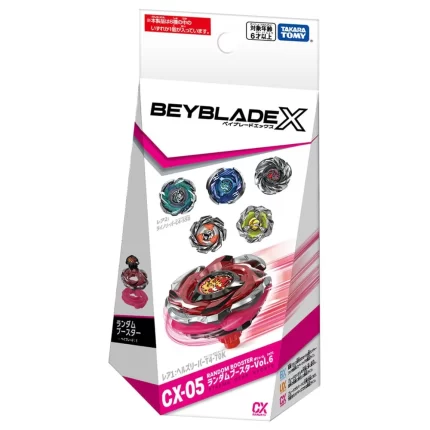
Takara Tomy Beyblade X CX-05 Apr Random Booster
HKD74.90 -
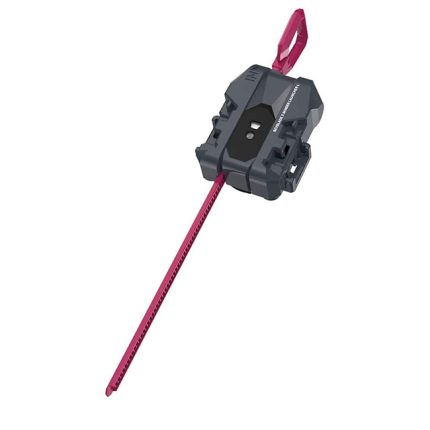
Takara Tomy Beyblade X BX-40 Winder Launcher (LR)
HKD54.90 -
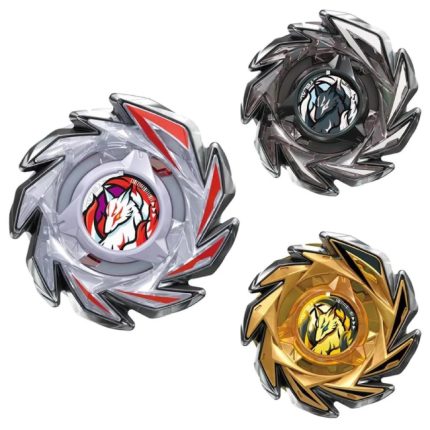
Takara Tomy Beyblade X CX-06 Random Booster Fox Brush Select (Active Toy)
HKD74.90 -
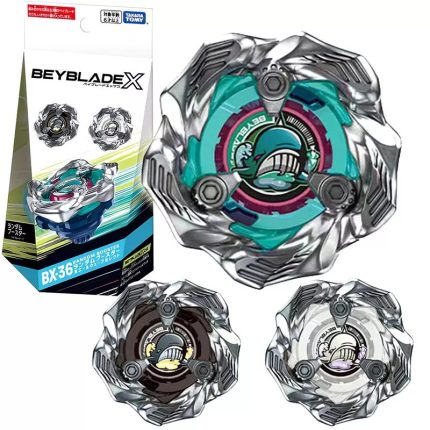
Beyblade X BX-36 Whale Wave Select Random Booster Takara Tomy (Active Toy)
HKD74.90